Fixed Blades / GEAR NOTES
Dedfish McCrea: a fixed blade with a quieter personality
Traditional character and a straightforward shape make this one worth a closer look.
By Last Stand Supply Co. · Archive date: February 15, 2024
Published October 24, 2026. Archive dates organize this retrospective collection; they are not original publication dates.
The attraction
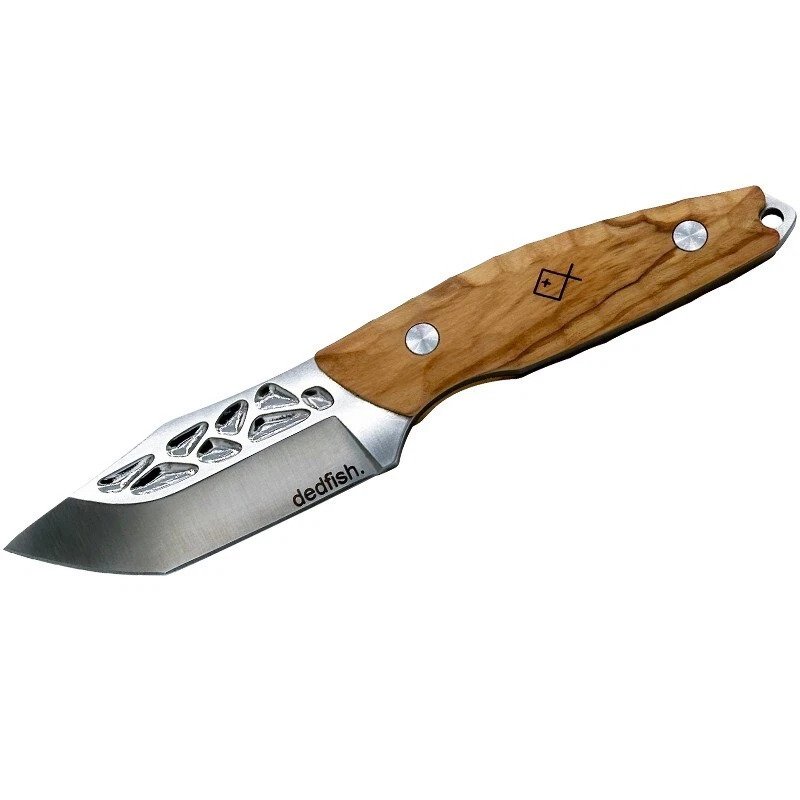
There is something appealing about a knife that does not need an aggressive outline to look useful. The Dedfish McCrea fits that part of the collection. It is a fixed blade with a traditional character, and the catalog’s wood-handled configuration gives it a warmer appearance than the usual black-on-black outdoor tool. I like that direction. A knife can belong beside a camp kitchen or a workbench without looking as though it was designed around a costume. The McCrea’s appeal starts with that simplicity and continues with the question that matters: does this style suit the work you do?
Why a fixed blade makes sense
For someone who prefers a dedicated outdoor knife, a fixed blade removes the opening and closing step of a folder. You still need a secure sheath and sensible storage, but the basic arrangement is easy to understand. I would think of the McCrea as a candidate for controlled utility cutting and ordinary camp tasks, rather than buying it on promises of extreme abuse. The useful comparison is with other manageable belt knives. Consider how much handle you want, where the sheath will ride, and whether you prefer a traditional finish over a more synthetic-looking tool.
Looking past the photograph
Wood is part of the appeal here, but it is also a reason to ask for a close view of the actual item. Grain and color vary, and those differences are a feature if you enjoy natural materials. The supplied catalog describes VG10 steel and full-tang construction; I would confirm the item markings and exact configuration before turning those details into a buying decision. Public coverage of the McCrea is limited. BattlBox identifies it in its Mission 117 lineup, but I did not find a substantive independent field review that establishes long-term performance. I would rather be clear about that than dress a product listing up as a test.
What to consider
A wood-handled knife asks for a little more thought about storage than a purely utilitarian synthetic handle. Keep it clean and dry, follow the maker’s care instructions, and avoid treating appearance as proof of indestructibility. A sheath also occupies space that a folding knife does not. If your priority is a tool that disappears into a trouser pocket, this probably is not the category to start with. If you enjoy carrying a separate outdoor knife, those compromises may be entirely reasonable.
My take
The McCrea is worth considering for its understated design and traditional feel. I would buy it because that combination fits my kit, not because someone called it the last knife I would ever need. Take a look at the listing and ask for the details that matter to you. With a small collection, there is room for that conversation before any decision.
What works
- Understated traditional styling
- Simple fixed-blade format
- Distinctive wood-handled catalog configuration
Worth considering
- Limited independent review coverage
- Exact materials and configuration should be checked
Sources & product-version notes
Independent field-review evidence was not located. This is a catalog-based buying assessment, not a new performance test.